Epidemiology
- Rare in healthy children: Estimated incidence < 1 per 1,000 person-years.
- Risk factors: Primary chickenpox infection (VZV) in the first year of life or in utero, and immunosuppression.
- Vaccine impact: The incidence has decreased drastically thanks to universal vaccination against chickenpox.
Clinical note: Unlike in adults, zoster in children is not usually a marker of occult malignancy unless there are other warning signs.
Clinical Presentation
Injuries
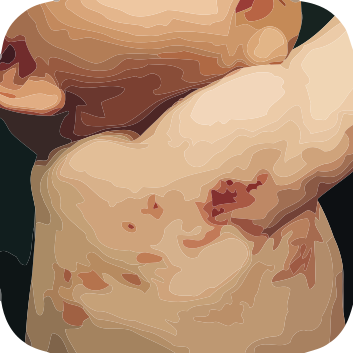
Maculopapular eruption that rapidly evolves into clustered vesicles on an erythematous base. Unilateral, respecting the midline. Dermatomal distribution (most common thoracic and cervical).
Symptoms
Mild prodrome of itching, tingling, or burning pain. Pediatric key: Severe pain (acute neuritis) is significantly less common and severe in children than in adults.
Diagnosis
The diagnosis is eminently clinical based on the appearance and distribution of the lesions.
Complementary Tests
- Vesicular exudate PCR: Gold standard. Reserved for atypical cases, neonates, immunosuppressed or CNS involvement.
- Tzanck test: Demonstrates multinucleated giant cells. Fast but not very sensitive, it does not distinguish VHS from VZV. (Almost obsolete).
Management and Treatment
General Measures
Local hygiene to avoid bacterial superinfection. Usual analgesia (Paracetamol / Ibuprofen) and drying/antipruritic lotions.
Antiviral Therapy
Aciclovir o Valaciclovir v.o. (Ideal iniciar < 72h)
Not routinely indicated in healthy children with mild disease. Absolute indications:
- Immunocompromised (requires admission and initial IV therapy).
- Ophthalmic zoster (V1 branch of the trigeminal involvement) or Ramsay Hunt syndrome.
- Disseminated or severe involvement.
- Neonates.
Vaccines and Pearls
The vaccine virus
The Oka vaccine strain (live attenuated virus) establishes latency and puede cause zoster, but the incidence is dramatically lower (up to 80% less) than with wild infection.
Postherpetic Neuralgia
Unlike in adults, the development of chronic intractable pain is exceptional in pediatrics.
Most frequent complication
The bacterial superinfection of the lesions (S. aureus, S. pyogenes). Educate parents about signs of cellulite.