Measles: Overview
Notifiable DiseaseDefinition and Epidemiology
Highly contagious viral disease, preventable by vaccination.
Measles is caused by a virus in the family Paramyxoviridae (gender Morbillivirus). Despite the existence of safe and effective vaccines (MMR), it continues to be one of the main causes of death in early childhood worldwide in areas with low vaccine coverage.
Transmission
- Direct by respiratory droplets or airborne transmission (aerosols).
- The virus can survive up to 2 hours in the air or infected surfaces.
- R0 (Basic reproductive number): 12 - 18 (Highly contagious).
Incubation Period and Contagion
- Incubation: 10 to 14 days (until the appearance of the rash).
- Contagiousness: From 4 days before to 4 days after the appearance of the maculopapular rash.
Clinical Presentation
1. Prodromal Phase (2-4 days)
It is usually severe. Thinking about measles when faced with a child whose general condition is affected and:
2. Exanthematic Phase
- Address: Cephalocaudal. It begins at the hairline, retroauricular and face, descending to the trunk and extremities.
- Characteristics: Maculopapular, erythematous, confluent (especially on the face and upper trunk).
- Resolution: It disappears in the same order of appearance, often leaving furfuraceous scaling and residual brownish pigmentation.
Pathognomonic Sign
Koplik spots
Click above to see the reference image.
- They appear 1-2 days before the rash.
- Located in the buccal mucosa (in front of molars).
- They disappear quickly (1-2 days after rash).
Emergency Triage
In the case of a patient with a febrile rash + recent travel or not vaccinated: IMMEDIATE RESPIRATORY ISOLATION before going to the general waiting room.
Click on the clinical images to see the details of the physical examination. (Display mode activated)
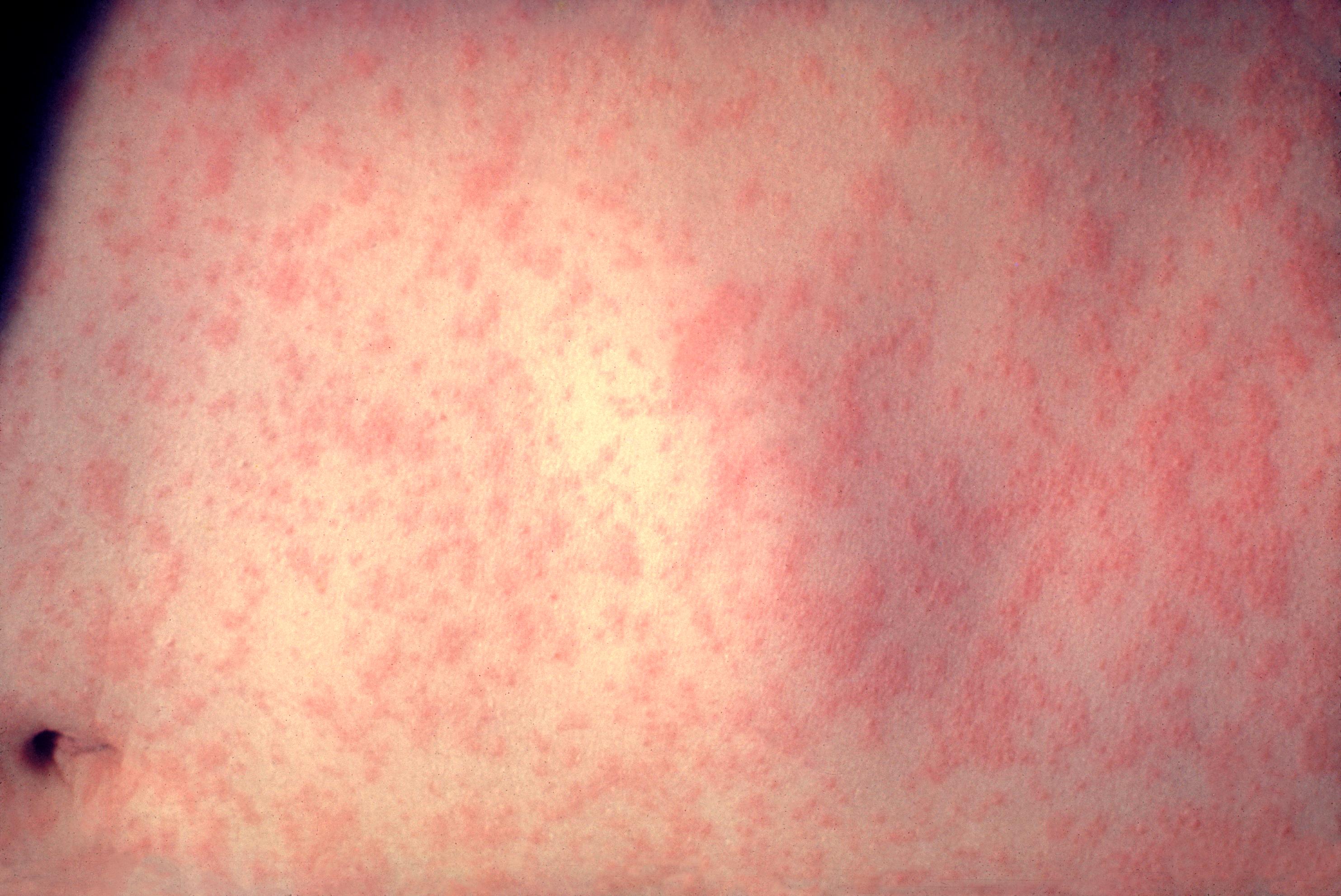
Confluent Maculopapular Rash
Typical trunk involvement.
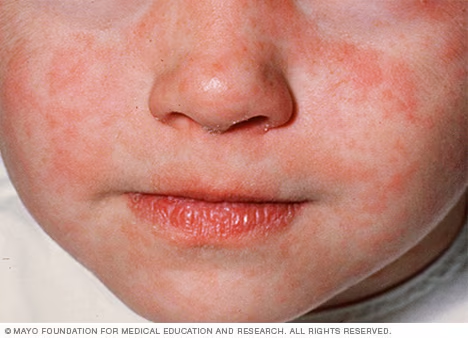
Measles Facies
Facial rash and catarrhal signs.
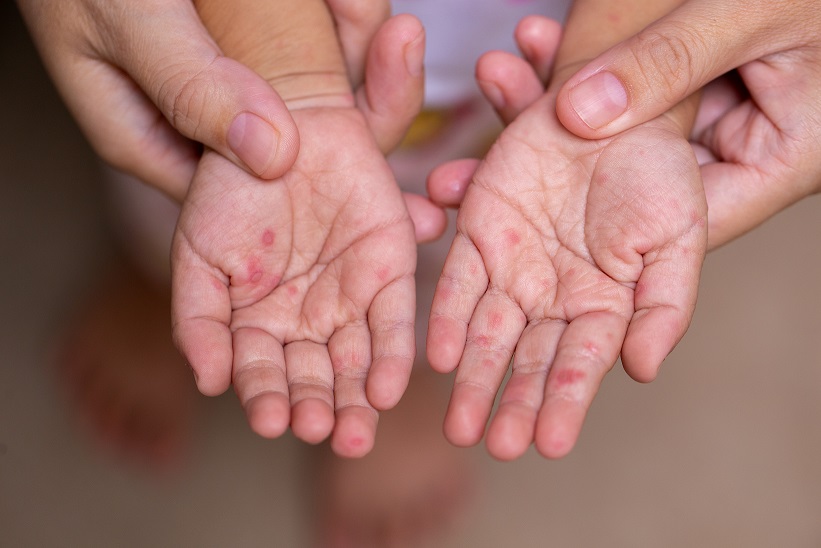
Palmar involvement
Acral clinical manifestation (note DD).
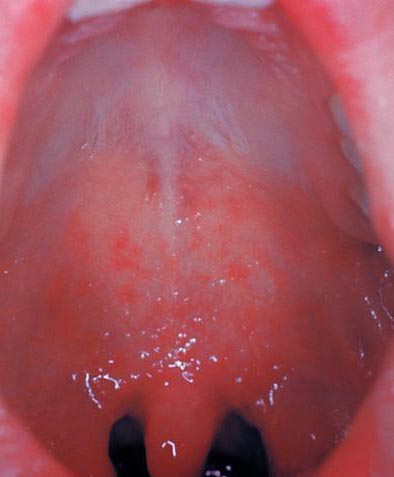
Oral Enanthem
Mucosal and palate involvement.
Clinical Criteria
The WHO defines a suspected clinical case when a patient presents:
- 1 Generalized fever ≥ 38°C
- Y Maculopapular (non-vesicular) rash lasting ≥ 3 days
- Y At least ONE of: Cough, Coryza or Conjunctivitis
Laboratory Criteria
Confirmation is made through (priority in emergencies):
Serology
Presence of antibodies Specific IgM for the measles virus (it usually becomes positive 3 days after the rash). Quadruple increase in IgG titers between the acute and convalescent phase.
Viral Detection (PCR)
Detection of viral RNA by RT-PCR. It is the early choice technique.
Therapeutic Management in Emergencies
Medium
- There is no specific antiviral treatment.
- Antipyretics for fever (Paracetamol / Ibuprofen).
- Maintenance of good hydration and nutritional support.
- Management of bacterial complications (pneumonia, AOM) with targeted antibiotic therapy if they occur.
Vitamin A (CRITICAL IN PEDIATRICS!)
The WHO recommends administering Vitamin A to all children with measles. Reduces morbidity (blindness) and mortality by replenishing reserves depleted by the virus.
- < 6 months: 50,000 IU (1 dose/day for 2 days)
- 6 - 11 months: 100,000 IU (1 dose/day for 2 days)
- ≥ 12 months: 200,000 IU (1 dose/day for 2 days)
For the Doctor (Emergency Doctor)
- Air respiratory isolation immediate (negative pressure if possible, N95/FFP2 mask for staff).
- Urgent Mandatory Declaration to Public Health in case of clinical suspicion, without waiting for confirmation.
- Avoid admission if it is not clinically necessary to reduce the risk of nosocomial transmission.
- Evaluate immunity of personnel who have been in contact.
For Patient and Contacts
- Home isolation strict for 4 days after the onset of the rash.
- School exclusion/mandatory day care.
-
Vaccination Pearl (Post-exposure prophylaxis):
- Triple Viral Vaccine (TV): To susceptible contacts in the first 72 hours of the exhibition.
- Immunoglobulin: High-risk contacts (infants <6 months, pregnant women, immunosuppressed) up to 6 days post-exposure.