Practical Guide
The initial management of any poisoned pediatric patient follows the pediatric advanced life support (PALS/APLS) sequence. The goal is to stabilize the patient before identifying the specific toxicant.
Once the patient is stabilized, the history and physical examination are crucial. The toxidromes They are sets of signs and symptoms that suggest a specific class of toxicant.
Key anamnesis: What?, How much?, When?, How?, Why? (accidental vs. intentional). Check history, usual medication and look for empty containers.
| Sign | cholinergic | Anticholinergic | Opioid | Sympathomimetic |
|---|---|---|---|---|
| Fur | Diaphoretic | dry, red | Normal | Diaphoretic |
| Pupils | Miosis | Mydriasis | Miosis | Mydriasis |
| Intest noises. | Hyperactive | Hypoactive | Hypoactive | Hyperactive |
| FC/TA | Bradycardia | Tachycardia | Bradycardia | Tachycardia, HTN |
| CNS | Confusion, coma | Agitation, delirium | CNS depression | Agitation, psychosis |
Its use is selective and increasingly restricted. The decision must be individualized.
The use of antidotes is specific for certain toxins. Knowing the indications and dosage is essential.
| Toxic | Antidote | Key Pediatric Indication/Dose |
|---|---|---|
| Paracetamol/Acetaminophen | N-Acetylcysteine (NAC) | IV loading dose: 150 mg/kg in 1 hour. Follow 9pm protocol. |
| Opioids | Naloxone | 0.1 mg/kg/dose IV/IM (max 2 mg). Repeat according to answer. |
| Benzodiazepines | Flumazenil | Controversial use. Risk of seizures! 0.01 mg/kg IV (max 0.2 mg). |
| Iron | Deferoxamine | Shock, metabolic acidosis, lethargy. 15 mg/kg/h IV. |
| Methanol / Ethylene Glycol | Fomepizole or Ethanol | Fomepizole: Load 15 mg/kg, then 10 mg/kg every 12 hours. |
| Anticholinergics | Physostigmine | Arrhythmias or severe agitation. 0.02 mg/kg slow IV (max 0.5 mg). |
| Digoxin | Anti-digoxin Fab antibodies | Lethal arrhythmias, severe hyperkalemia. Dosage according to intake or levels. |
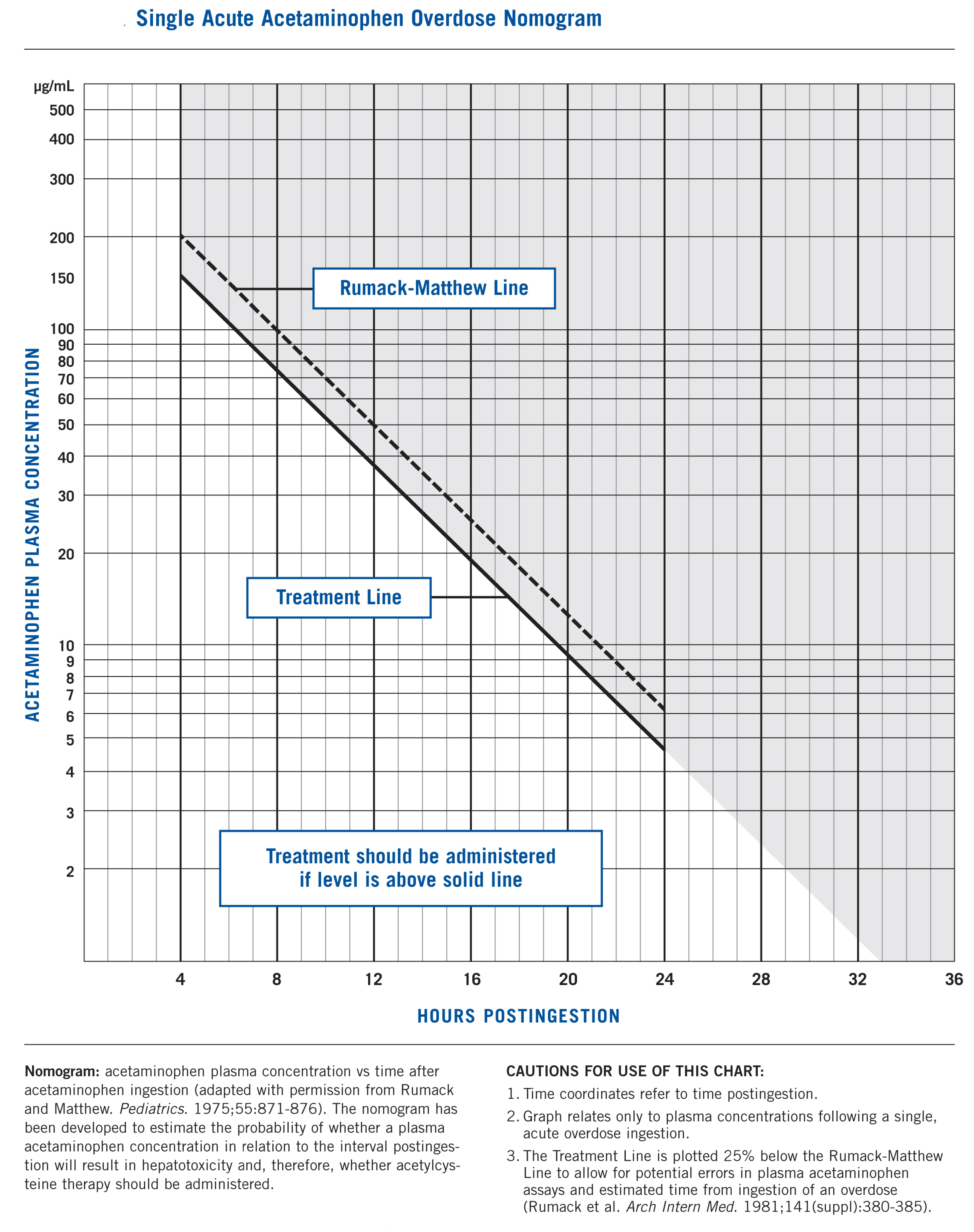
It is one of the most common and potentially serious poisonings due to its hepatotoxicity. The acute toxic dose is >150 mg/kg.
The key is the use of for acute intakes. Paracetamol levels should be measured at 4 hours post-ingestion (or as soon as possible after 4 hours).
If the plasma level is above the treatment line, it is indicated to start the antidote: N-Acetylcysteine (NAC). Start NAC empirically if there is doubt about the time of intake, if it is massive, or if levels will not be available in time.